.png)

[PLACE] 20150114 Temple of Dawn - Wat Arun @ Bangkok

Wat Arun, or also known as the Temple of Dawn has a history that stretches way back into the seventeenth century and has undergone various restoration. It is a Buddhist temple which a central prang which measures more than 200 feet along with four smaller satellite prang which was built later in the nineteenth century during the reign of King Rama II. It is situated by the river bank of Chao Phraya River and is visible from far due to its height.
In addition to the history, the highlight of Wat Arun would be the architecture and the steep climb to the top platform of the central prang. The central prang has 3 levels in total and encrusted with colourful tiles and porcelain. Well, most of it are broken pieces of porcelain. The main challenge will be climbing up to the platform where many tourist may halt due to fear of height. The stairs are indeed very steep but climbable with the help of railings and ropes.
An entrance fee of 50 Baht is chargeable for foreigners and the temple opens until 5:30pm. Wat Arun is a favourite spot for photography enthusiast with its unique architecture and the landscape. Capturing a picture during the dawn or the sunset with the magical colours of the sky enhances the mysterious feel, whether from near or afar.
There's some rooftop bars and cafe at the opposite side of Wat Arun, at the Tha Tian Pier which gives you a very good vantage point for photoshooting. However, despite the nice weather during the day, the sunset did not give much colours to my photo. Perhaps next time.
Wat Arun, west side of Chao Phraya River, opposite Tha Tian Pier (Pier 8)
Nearest BTS Stations: Nil
Telephone: +66 2891 2978
Opening Hours: 08:00am until 5:30pm
TO GO
There are a few methods to get to Wat Arun and unfortunately there's no direct assess by BTS nor MRT. While taking cab or tuk tuk is the most convenient way, you may still be able to reach Wat Arun if you have to take the BTS.
Take the Silom Line (Dark Green) and disembark at Saphan Taksin Station. Walk towards Exit 2 towards the Central Pier, you may then purchase the boat ticket from the ticket counter for 40 Baht per pax and then take the Chao Phraya tourist boat. Get off at Pier 8 - Tha Tian Pier. Wat Arun is located at the opposite bank hence you need to take another cross river shuttle for another 3 Baht per pax per trip.
Wat Arun is right after Wat Pho in my itinerary, due to the proximity of both temples. Would recommend to visit both together.
Wat Arun is right after Wat Pho in my itinerary, due to the proximity of both temples. Would recommend to visit both together.
ATTRACTION
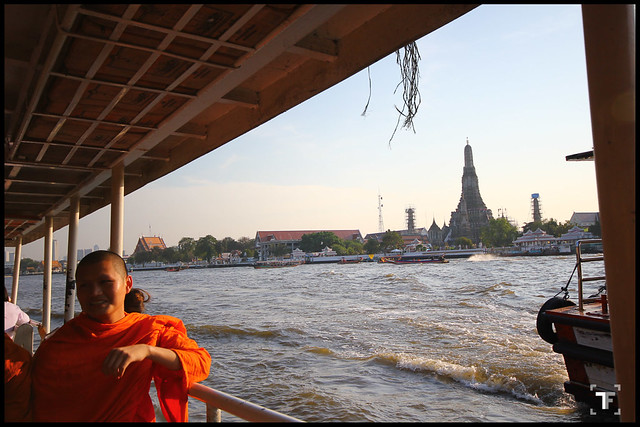
I travelled across the Chao Phraya River after visiting Wat Pho with a fee of 3 Baht per pax per trip. Buddhist monks get to transit for free as there are many temples around this area. It is hard to shoot into the sun without blowing out the mid tone and highlights.
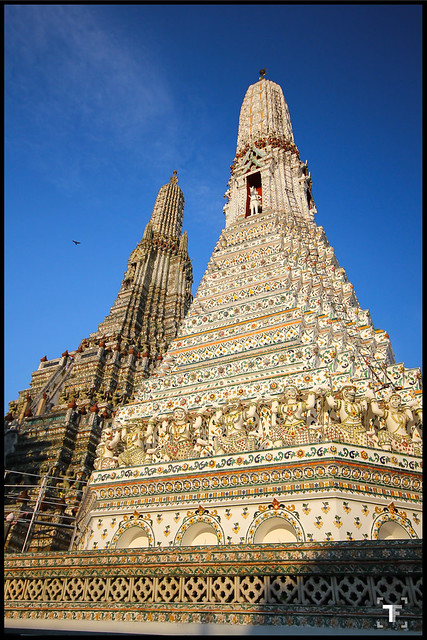
However, when you shoot with the sun at your back, the wonderful colours of the bright sky and the temple shines. Wat Arun is one of the prettiest temples around Bangkok even without the vivid colour structures or roof, thanks to its detailed glass and porcelain. The prangs have a base of devils or monkeys statues that supports the upper structure.
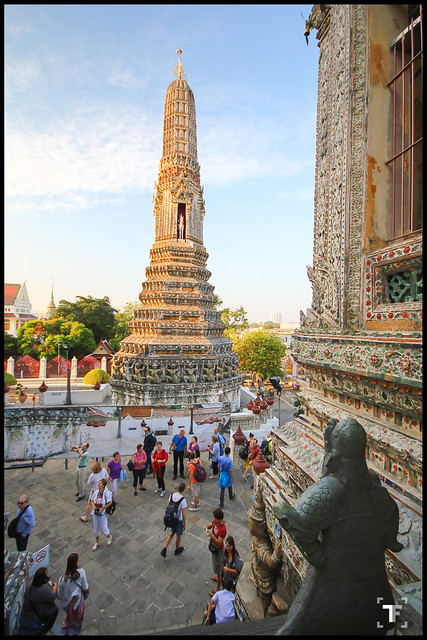
The temple is undergoing restoration work during my visit, which cause quite a disappointment for photoshooting due to the scaffoldings. This is the only satellite prang that is not covered by the scaffoldings.
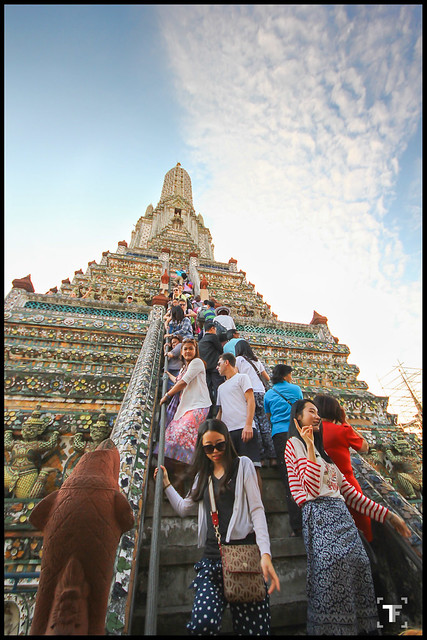
The straight and steep climb at the central prang. The ascend and descend shares the same stairs as other three entrances are closed. I'm not sure whether there is a limit of numbers that are allowed at one time. Proper attire is advised to pay respect to the sacred grounds, and you probably also do not want to wear too short for the climb as well.
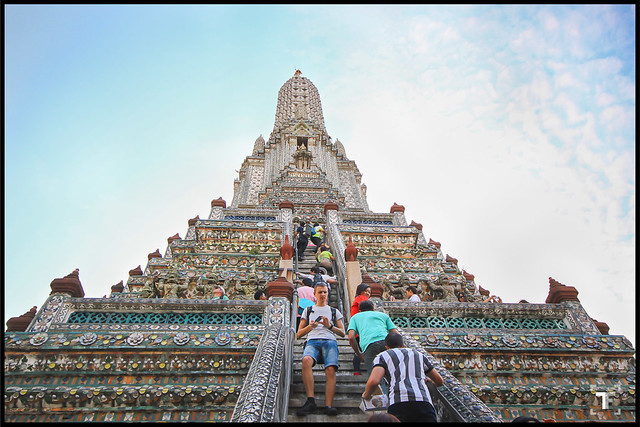
The climb will lead you to the first platform or terrace, which is bigger and wider and able to accommodate more people. The adventurous ones will probably continue to climb further to the second terrace or platform, which is steeper and narrower than the first.
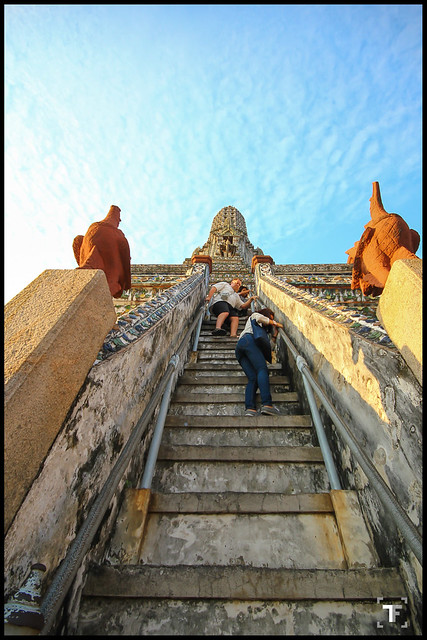
You can judge the steepness of the stairs from this picture. Also notice the ascend of each stair is much taller than our usual steps.
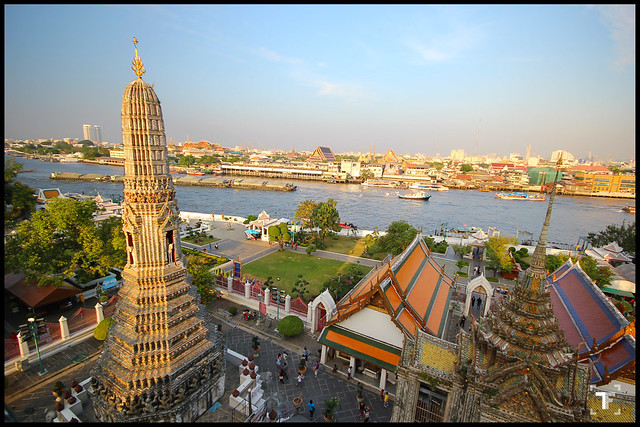
From the top, you will be able to have an overview of the surroundings, including the Chao Phraya River, which you also can observe the Wat Pho and Grand Palace from here.
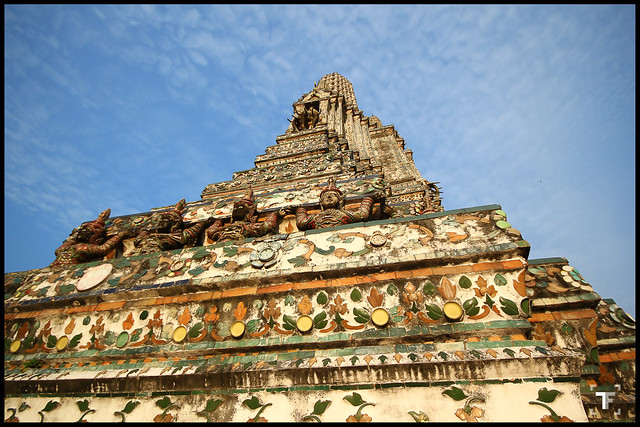
The details of the porcelain and sculptures of the prang that makes Thai architecture so unique, with the trace of Indian and Chinese structures.
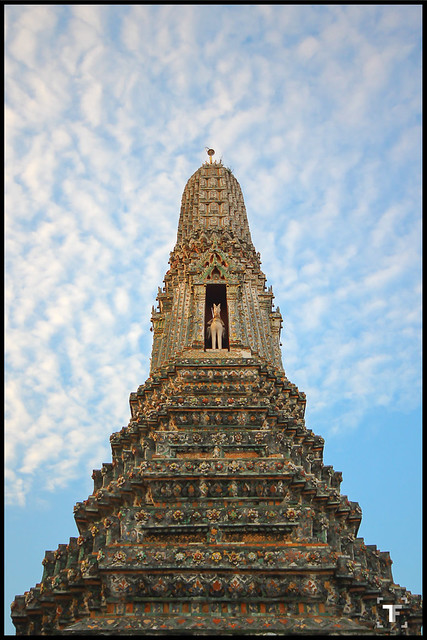
The top of the central prang, where the Hindu God, Indra riding on Erawan. Each of the details on the temple has its meanings that relates to Buddhism and Hinduism. It is an interest blend of both teachings.
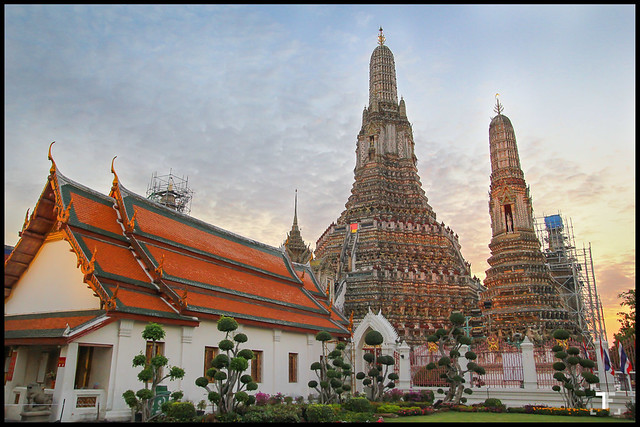
The scaffolding put me off to shoot an overview of Wat Arun unfortunately. I tried to wait for the sunset but the colours just fade quickly behind the clouds without much contrast. The image above is already enhanced in Lightroom but is only able to bring out some colours. Maybe next time, Wat Arun.
You may also consider visiting Wat Pho after Wat Arun but be mindful of the closing hours.
SUMMARY
A very unique and historical site of the beauty lies on the detail and the structure of the temple. Advised to come in the morning before the crowd, or before sunset for a nice picture. Dress code is applicable and the steep climb is not for the fainted heart.
Attraction
|
☆☆☆☆☆
unique, historical, and challenging
|
Cleanliness
|
☆☆☆☆
|
Entrance Fee
|
50 Baht
|
Opening Hours
|
08:00am until 5:30pm
|
Wifi
|
N/A
|
Parking
|
N/A
|
Website
|
N/A
|
GPS: 13.743600, 100.489049






![[FOOD] 20150426 Restoran Pik Wah (MABA) 碧华楼酒家 @ Jalan Hang Jebat, Kuala Lumpur](https://blogger.googleusercontent.com/img/b/R29vZ2xl/AVvXsEiBsn6B-wrz5DoP-ZU5UCl0-f2lWLjESqdu-Vku249kfRwf-sDjoZjZP12SlQC2FG5dFlAGHjxnC89mDUsB6lHgdhSqXnYFPeTcBKbeYWsS_0d1jSxHcY73Y0lGgLZn7vVNYHV8r3cT1_Y/s72-c/Restaurant+Pik+Wah.jpg)
![[FOOD] 20150113 Ning Mango Sticky Rice @ Thong Lo, Bangkok](https://blogger.googleusercontent.com/img/b/R29vZ2xl/AVvXsEhDjM7hb9mw-Z7mPa49_kqjzE-HXQhEbF2RGXk0Eit6S8IIwSSNwSn2APmetOQkDEyOrS8iNiNMXujozYGaDpYfAHhN5JFJE7bF4JI_LBFhu5fnpMpNpmj5YDc2_vk7fNKaBQDwFQYFtkU/s72-c/Ning+Mango+Sticky+Rice.jpg)
![[FOOD] 20141224 Yee Shun Dairy 義顺牛奶 @ Macau](https://blogger.googleusercontent.com/img/b/R29vZ2xl/AVvXsEjmsOZP9ZfVJ2kUrPnccNbLAZHAKQOA2Vae3w4hNCbP2j-hMEbWM5RhHg7FYL8Zrrc5M7MpQGPKzu8O9i_qwWYYuiyM-Len2sbpcwfvi_K0V1DSFWvWJtXE3WD9OXXjfcJGiyVlXM4B0lQ/s72-c/Yee+Shun+Dairy+Macau.jpg)
![[FOOD] 20141223 Guangzhou Restaurant 广州酒楼 @ Liwan, Guangzhou](https://blogger.googleusercontent.com/img/b/R29vZ2xl/AVvXsEhdkKmjxnHoQi4j2fKoVAPvNqJU22afKm-m5cJHdmZYfOFTdRcJp4y0fIR_pgi2U1V83GoetKSo_nyx-ixBwKsd8XeZBSqXIYBDG2naRnCsehfvMO503oLSkVM_iAu-yT2BBoThxT8v9MA/s72-c/Guangzhou+Restaurant.jpg)
![[FOOD] 20141220 Hua Cheng Restaurant 华城渔港 @ Leyuan Road, Luohu, Shenzhen](https://blogger.googleusercontent.com/img/b/R29vZ2xl/AVvXsEjeCMX09VE5bdjKcXBAFcDIM2jq1VyUoNfiWIWNHuZ8PYAg_kXMDnqvWaTci4GYIuXLYZjP7qr9Pm5YS7b8aQcInA7h97oUX3ArZ3fhUpH0xzXih9FesJtONKB3QIEvyBAeTvzbDjfmZAU/s72-c/Hua+Cheng+Seafood+Restaurant+Shenzhen.jpg)
![[FOOD] 20141224 Chan Kong Kei 陳光記飯店 @ Macau](https://blogger.googleusercontent.com/img/b/R29vZ2xl/AVvXsEi1H6-j8tT6oGyphR4DCXjjBIBsc4oaDrymqIZ1fgBkmTrWxDEmxirkHgJTnrtvgR4NS04Hd4vzg9joT_LmwaDTaI4-B6Zet-hTo3Gscji6Oy0zi42-ln5E-cNfW5Y9IxqXgyS-wtbPHNg/s72-c/Chan+Kong+Kei+Macau.jpg)
![[FOOD] 20141220 Xinjiang Flat Bread @ Luohu, Shenzhen](https://blogger.googleusercontent.com/img/b/R29vZ2xl/AVvXsEj0XiKwDf_c0d51C0TaqtWogQRSL9gj0MgdL2qqPEgI65LSYAhxaj4cJrW_kMe8ucFzqNzMEchJaVlVQQENB_wFl_4AwZiqmw7-tGvwkqkWfef5FHrKaJmMVpHgWqYzEJfLm9kKsjC_J10/s72-c/IMG_3311.jpg)
![[PLACE] 20161017 Jiuzhaigou 九寨沟 @ Sichuan 四川](https://blogger.googleusercontent.com/img/b/R29vZ2xl/AVvXsEh3fzJi8nOjGhtm3pK2E7n4deBA-eah5EtWT2VUoKV0uguDsVv3zNS2zojXbLQLWrsWwTzfR2PZEWYQ9yAsp6q1s6xEtKTFHgzEPwAai8oaYtJUDfoDAawngJIrQ7aC2OdmJtuwDOoKN2A/s72-c/IMG_3111.jpg)
![[FOOD] 20141221 Guilin Rice Noodles 爽又爽桂林米粉 @ Haizhu, Guangzhou](https://blogger.googleusercontent.com/img/b/R29vZ2xl/AVvXsEg9sXAx5_g5k3XuL7Cendv2ZmeBkeDDGttd1cJRkQU86q4b5nOO3yaKipul_wEBkv0zE9EhHel4l-z98CLYJKIQYBpHwvGD7P2feQTPqy8vm2lFd8zlZwSIjJn8xRK54mt9aZkBlDZ5nGg/s72-c/IMG_3674.jpg)
![[FOOD] 20140711 Haji Musa Ikan Bakar @ Crystal Bay, Melaka](https://blogger.googleusercontent.com/img/b/R29vZ2xl/AVvXsEjGq3NYlVaTillskDyiOq-4mWvzRBYLhUKD4Z97bR1PN1of_EIh1X_6WwY5qLmp41WGP3Qu-j2ArWUynDKJfH4sgENvWOUSw6JPAKQmYGDM4HjkLUcHU9bt9cst7CIijhDWpf_5UqId-LU/s72-c/Haji+Musa+Ikan+Bakar+Melaka.jpg)